How Precast Concrete Improves Safety and Reduces On-Site Risks in Construction

Construction is one of the most hazardous industries in the world. Every year, thousands of workers face injuries due to falls, collapsing formwork, unsafe lifting practices, and exposure to dust or heavy equipment. As project timelines shrink and labour shortages increase, safety risks only multiply.

This is where precast concrete technology brings a revolutionary shift.

By shifting 70–80% of construction activities from chaotic job sites to controlled factory environments, precast drastically reduces the risk exposure of workers. In fact, precast projects are consistently proven to be safer, cleaner, and more predictable than conventional methods.

This blog explores how precast technology significantly enhances construction safety and why safety-focused developers are rapidly embracing it.


1. The Safety Challenges of Traditional Construction

Traditional cast-in-situ construction involves:

  • Scaffolding and shuttering
  • Manual rebar tying
  • Concrete pouring at height
  • Heavy lifting
  • Congested sites
  • Dust, noise, and debris
  • Weather interruptions
  • Unskilled labour handling complex tasks

These variables create a high-risk environment where even a small mistake can lead to accidents.

In contrast, precast removes most of these hazardous activities from the site altogether.


2. How Precast Reduces Risks at Every Stage

✔ Minimum Work at Heights

In conventional construction, workers stand on scaffolding to tie rebar, install formwork, or pour slabs.
In precast, these components are manufactured on ground-level beds inside a factory.

Result → 90% reduction in height-related accidents.


✔ Elimination of Shuttering & Formwork Hazards

Formwork-related failures are among the top causes of site accidents.
Since precast uses reusable factory moulds, workers avoid:

  • Formwork collapse
  • Faulty props
  • Alignment issues
  • Improper curing leading to structural failure

✔ Better Control Over Rebar & Concrete Handling

Manual rebar tying and concrete pouring involve sharp tools, heavy lifting, and constant movement.

Precast replaces these with:

  • Automated rebar machines
  • Controlled concrete batching
  • Mechanical placement in moulds

This reduces:

  • Cuts
  • Strains
  • Chemical exposure
  • Manual handling injuries

✔ Reduced Site Congestion

A major cause of accidents is overcrowding of workers, equipment, and materials.
Precast reduces site labour by 40–60%, creating more open and safe working zones.


✔ Improved Structural Stability During Construction

Traditional buildings rely on temporary supports until the concrete gains strength.
Precast elements arrive with full strength, eliminating the risk of:

  • Early-stage collapse
  • Weak curing
  • Improper compaction

✔ Controlled Factory Environment

Inside a precast factory:

  • Machines handle heavy lifting
  • Surfaces are stable
  • Lighting is consistent
  • Temperature is controlled
  • Workflows are standardized

This drastically minimizes unpredictable risks.


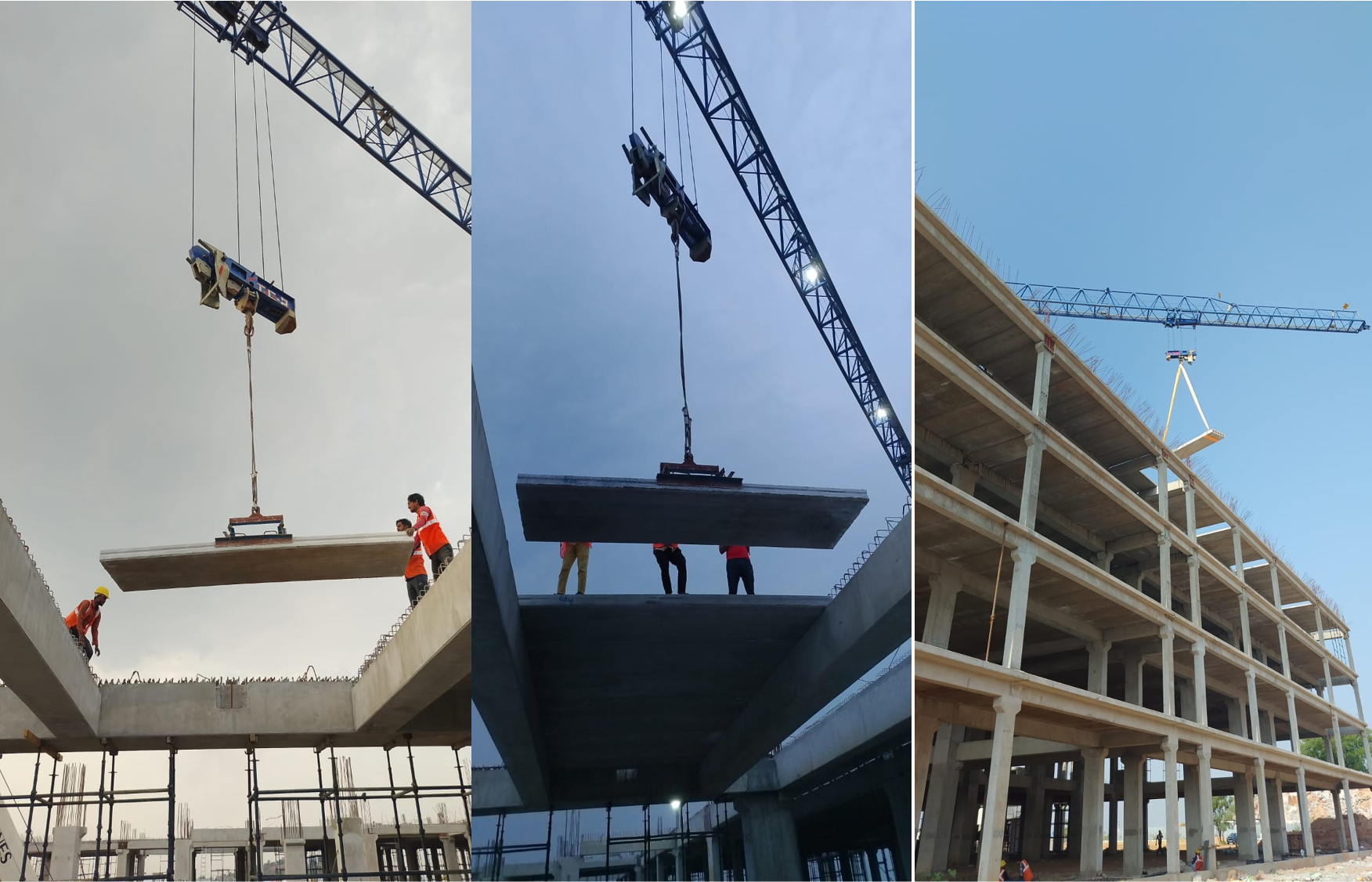
3. Enhanced Lifting Safety Through Precast

One of the biggest risks in construction is moving large or heavy loads.

Precast systems improve this through:

Built-in Lifting Anchors

Every precast element has engineered lifting points calibrated for safety.

Crane Movement Planning

Lifts are pre-planned with load charts and weight mapping.

Repeatable Lifting Procedures

Since panels are consistent, crane operators follow the same safe sequence each time.

Fewer Unpredictable Loads

On-site concrete varies in weight due to moisture, mix, and human error — precast eliminates this.


4. Weather-Proof Construction Improves Safety

Weather is a major hazard in traditional construction:

  • Rain creates slippery surfaces
  • Wind destabilizes scaffolding
  • Heat stress affects workers
  • Storms disrupt curing
  • Dust increases risk of respiratory issues

Precast greatly reduces dependency on weather since most work is done indoors.

On-site assembly is quick, predictable, and largely unaffected by climate fluctuations.


5. Safety Through Standardization

Precast factories follow strict manufacturing protocols:

  • Quality checks at every stage
  • Strict curing procedures
  • Machine-controlled precision
  • Standard operating processes
  • Testing for each batch

This consistency improves not just quality—but also worker safety.


6. Environmental Safety & Dust Reduction

Traditional construction exposes workers to:

  • Cement dust
  • Silica dust
  • Noise pollution
  • Debris
  • Chemical hazards

Precast minimizes these by:

  • Using enclosed batching systems
  • Automated pouring
  • Cleaner, less noisy operation
  • Reduced demolition of formwork

This creates a healthier environment for both workers and nearby residents.


7. Faster Construction = Shorter Risk Exposure

The faster a project finishes, the shorter the risk period.

Precast reduces project timelines by 30%–60%, which means:

  • Fewer workdays = fewer chances of accidents
  • Lower probability of weather disruptions
  • Reduced machinery exposure
  • Less fatigue and labour turnover

Shorter construction durations directly translate into higher overall safety.


8. Case Studies: How Precast Increased Safety

Metro Rail Projects

Using precast segments eliminated dangerous on-site concreting at heights.

High-Rise Residential Projects

Precast walls and slabs allowed faster floor cycles—reducing scaffolding duration.

Schools & Hospitals

Cleaner environments reduced exposure to dust and noise, essential for sensitive zones.


9. Why Developers Prefer Precast for Safety-Focused Projects

Developers increasingly choose precast because it ensures:

  • Better worker protection
  • Reduced liability and compliance issues
  • Fewer delays from safety-related stoppages
  • Improved brand reputation
  • Stronger chances of getting certifications (IGBC, GRIHA, LEED)
  • Compliance with labour and safety laws

Safety is not just a moral responsibility—it is a business advantage.


Conclusion

Precast concrete is not simply a technology—it is a safer way to build.

By reducing hazardous tasks, eliminating risky site practices, and shifting work to controlled factory environments, precast ensures:

  • Safer workers
  • Safer buildings
  • Safer cities

As India’s construction sector evolves, safety will move from being a compliance requirement to a strategic priority. Precast technology is leading this transformation.
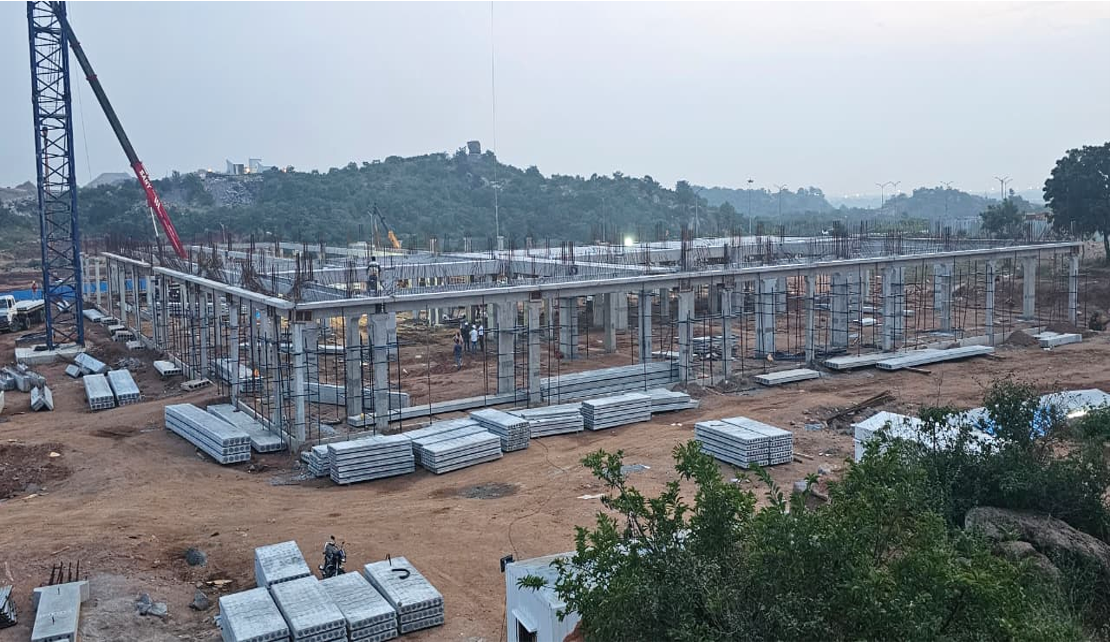

Why Precast Technology Is the Future of Indian Construction: Speed, Savings, and Sustainability

India is entering a new era of rapid urban growth. Cities are expanding, infrastructure demand is rising, and developers are under pressure to deliver large-scale projects faster than ever—without compromising quality. Traditional construction methods are struggling to keep pace.

This is where precast technology has emerged as a game-changer.

By shifting construction from messy, labour-intensive sites to controlled factory environments, precast allows builders to construct stronger, faster, and more cost-efficient structures.

In this blog, we explore why precast technology is becoming the future of Indian construction and why developers, contractors, and policymakers are rapidly embracing it.


1. The Growing Need for Faster Construction in India

India’s infrastructure demand is enormous:

  • Urban population is expected to reach 675 million by 2035
  • Housing shortage stands at over 18 million units
  • Government targets 100 smart cities
  • Massive push for industrial parks, warehouses, data centers, metros, highways

Traditional construction methods, which depend heavily on manual labour and on-site curing, are too slow to match this pace.

This gap has created a massive opportunity for precast.


2. What Makes Precast So Powerful?

Precast is the process of casting structural components—walls, slabs, beams, columns, staircases—in a factory and assembling them like Lego blocks on site.

Here’s why the system is so effective:

✔ Fast Construction

Precast reduces construction time by 30%–60%, depending on project scale.

✔ Superior Quality Control

Factory production ensures uniformity, precision, and fewer defects.

✔ Reduced Labour Dependency

Manual labour requirements drop by nearly 40%, helping counter India’s skilled labour shortages.

✔ Safer Work Environment

Most work shifts to a controlled plant, reducing on-site accidents.

✔ Sustainable & Eco-Friendly

  • Less material wastage
  • Optimized use of cement
  • Lower carbon emissions
  • Reusable moulds

3. Applications of Precast in Indian Construction

Precast is being used across a wide range of sectors:

Residential Buildings

High-rise apartments, gated communities, and affordable housing.

Commercial & Office Complexes

Faster construction, better acoustics, and reduced maintenance.

Industrial Buildings

Precast columns, beams, and wall panels speed up factory construction.

Warehouses

Long-span precast systems reduce steel usage and increase floor space.

Infrastructure

Bridges, metro rails, flyovers, tunnels, railway platforms, and retaining walls.

Public Buildings

Hospitals, hostels, schools—where speed and affordability matter most.

India is already seeing massive adoption in cities like Bangalore, Hyderabad, Chennai, Pune, Mumbai, and Ahmedabad.


4. Cost Efficiency: A Major Indian Advantage

While precast may require higher initial investment, it significantly reduces long-term costs.

Where developers save money:

  • Reduced labour
  • Lower wastage
  • Faster project delivery → earlier sales
  • Better design accuracy
  • Reduced rework
  • Shorter loan cycles
  • Optimized material usage

Many developers report 8%–15% cost savings over the project lifecycle.


5. Why Precast Is the Future: Key Drivers in India

1. Labour Shortage & Rising Wages

India’s construction labour force is shrinking due to:

  • Migration
  • Alternative employment opportunities
  • Better education and career shifts

Precast reduces dependency on site labour.


2. Speed = More ROI

Time saved → quicker handovers → faster revenue generation.

Builders can complete two projects in the time of one.


3. Government Push for Modern Construction

Schemes like:

  • PMAY
  • Smart Cities
  • Housing for All
  • Bharatmala & Sagarmala
  • Industrial Corridors

These demand rapid, scalable construction—perfect for precast.


4. Sustainability Mandates

Government is tightening sustainability and waste management rules.
Precast aligns perfectly with green building codes.


5. Quality Conscious Buyers

Modern homebuyers seek:

  • Crack-free walls
  • Sound insulation
  • Better finish
  • Long-lasting structures

Precast delivers all of these.


6. How Precast Overcomes Traditional Construction Challenges

Traditional construction struggles with:

ChallengePrecast Solution
Delays due to weatherFactory manufacturing unaffected
Material wastageControlled batching, reuse of moulds
Poor finish qualityAutomated production lines
On-site congestionPlug-and-play assembly
Skilled labour shortageMechanical production
Structural inconsistenciesMachine-controlled precision

Precast is not just faster—it is fundamentally better.


7. Myths That Stop Developers From Adopting Precast

❌ “It’s too expensive”

Truth: Higher initial investment, but lower total project cost.

❌ “It limits design flexibility”

Truth: Complex curves, textures, and architectural features are possible.

❌ “It’s only for large projects”

Truth: Even villas and mid-rise buildings can benefit.

❌ “Repairs are difficult”

Truth: Modern epoxy and bonding agents make maintenance simple.


8. Success Stories From India

  • L&T has completed thousands of apartment units using precast.
  • Bangalore & Hyderabad are leading in precast adoption for IT parks and premium residential blocks.
  • Affordable housing projects across Telangana, Maharashtra, and Tamil Nadu are using precast to deliver 10,000+ units rapidly.
  • Metro rail infrastructure now uses precast for piers, girders, and tunnel rings.

India is no longer exploring precast—it is implementing it at scale.


Final Conclusion

Precast is not a trend.
It is the construction method that will define India’s next decade.

Developers adopting precast will experience:

  • Faster timelines
  • Higher quality
  • Better margins
  • Lower risk
  • Stronger structures
  • Increased sustainability

Those who delay adoption risk being outpaced by faster, more efficient competitors.

The Future of Construction Is Automated: How Robotics & Automation Are Transforming Precast Technology

The construction industry is entering a revolution—one driven not by bricks and mortar alone, but by robots, automation, and artificial intelligence. While many sectors embraced automation decades ago, construction lagged behind due to its complex, on-site nature. But with the rise of precast technology, the landscape has changed completely.

Precast manufacturing creates the perfect environment—controlled, repetitive, predictable—for automation to flourish. As a result, factories across the globe are rapidly adopting robotic systems, automated machines, and digital workflows that drastically improve productivity, quality, and predictability.

In this blog, we explore how automation is reshaping the future of precast construction and why companies that adapt early will lead the next generation of infrastructure and real estate.


Why Automation Fits Perfectly Into Precast Manufacturing

Traditional construction is messy, weather-dependent, and labour-intensive. Precast, however, moves most of the work to a factory setting, making it ideal for automation.

Here’s why precast and automation are a perfect match:

1. Controlled Manufacturing Environment

Temperature, humidity, curing cycles—everything is consistent.
This predictability makes it easier for robots to work without error.

2. Repetitive Tasks

From mould cleaning to rebar tying, many precast tasks repeat in cycles.
These are exactly the type of tasks automation excels at.

3. Reduced Human Error

Manual measurement and formwork prep often cause small deviations.
Robotic accuracy ensures precision every single time.

4. Safety Improvements

Robots handle heavy lifting, hazardous chemicals, and repetitive strain activities—reducing accidents and injuries.


Game-Changing Automation Technologies in Precast

Automation is not limited to robots. The ecosystem includes software, sensors, machines, and AI systems working together. Below are the most transformative technologies shaping the industry:


1. Robotic Formwork Cleaning & Preparation

Robots now clean and oil moulds with precise pressure and speed.
This eliminates manual labour and improves form lifespan.

Benefits:

  • 80–90% faster cycle time
  • Cleaner surfaces → better finish
  • Consistent formwork preparation

2. Automated Rebar Bending, Cutting & Placement

Smart rebar machines automatically bend and cut steel according to digital inputs.
Advanced robotic arms place steel within the mould with extreme accuracy.

Benefits:

  • Zero measurement errors
  • Faster production cycles
  • Improved structural reliability

3. Automated Concrete Distribution Systems

Overhead concrete casting machines pour concrete evenly, maintaining consistency in density and thickness.

Benefits:

  • Uniform compaction
  • Reduced wastage
  • Faster turnaround time

4. Curing Chambers With Automated Climate Control

Curing is one of the most critical phases of precast manufacturing.
Automated chambers control:

  • Temperature
  • Humidity
  • Steam cycles
  • Airflow

This leads to stronger, more durable precast elements.


5. Robotics for Handling, Lifting & Storage

Large precast elements can be dangerous to handle manually.
Robotic cranes and automated guided vehicles (AGVs) transfer elements safely within the factory.

Benefits:

  • Reduced accidents
  • No surface cracks or edge damage
  • Optimized storage management

6. AI-Driven Quality Control Systems

Cameras, sensors, and AI algorithms inspect each precast element in real time.

They detect:

  • Air pockets
  • Dimensional deviations
  • Surface defects
  • Reinforcement misalignment

This means defects are caught instantly—not after installation.


7. Digital Twin & BIM-Integrated Production

Before an element is even cast, its entire geometry and reinforcement details are fed into BIM.
This allows machines to run automated production cycles with no manual drawings needed.


How Automation Benefits Precast Manufacturers

Companies adopting automation experience immense advantages:

✔ Lower Labour Dependency

Automation reduces the need for large, manual labour teams—especially helpful in markets facing labour shortages.

✔ Faster Production Cycles

Robots work 24/7 without fatigue.
Factories achieve much higher throughput.

✔ Better Profit Margins

Reduced wastage + faster output + fewer errors = higher profitability.

✔ Superior Quality

Automated consistency ensures every element meets high structural and aesthetic standards.

✔ Stronger Market Position

Clients trust brands with advanced technology, leading to more contracts and higher project value.


Real-World Examples of Automated Precast

Here are some global examples leading the change:

  • Elematic (Finland) – automated hollow-core slab production lines
  • Weckenmann (Germany) – robotic reinforcement and palletizing
  • Progress Group – full automation for precast wall and floor systems
  • Chinese Mega Factories – fully automated, AI-driven facilities producing thousands of elements daily

India, too, is catching up quickly with several new automated precast plants emerging in major cities.


What the Future Holds: Next-Gen Automation in Precast

The next decade will take automation even further:

1. Fully Autonomous Factories

End-to-end production cycles controlled entirely by AI and robotics.

2. 3D Concrete Printing + Precast Hybrid Systems

Large, complex structures manufactured with robotic 3D printing in controlled environments.

3. Predictive Maintenance Using IoT Sensors

Machines will self-diagnose and schedule their own servicing.

4. Blockchain for Supply Chain Tracking

Every precast element will have a digital identity for complete transparency.


Final Thoughts

Automation is not the future of precast—it is the present.

Companies that adopt automation now will:

  • Build faster
  • Build smarter
  • Build safer
  • Reduce costs dramatically
  • Deliver superior quality every time

Whether you’re a builder, developer, architect, or precast manufacturer, embracing automation is no longer an option—it’s the difference between leading the industry and falling behind.

Top Advantages of Using Precast Concrete in Construction

The construction industry is changing faster than ever. Developers want quicker project delivery, homeowners want premium quality, and builders are under pressure to reduce labour, wastage, and delays.
This is exactly where precast concrete stands out as one of the most efficient, durable, and future-ready construction technologies.

Precast isn’t just a trend—it is becoming the backbone of modern residential, commercial, and infrastructure projects across India and the world.

In this blog, we break down the major advantages of using precast concrete and explain why more builders are shifting to this smart construction method.


What Is Precast Concrete? (Quick Refresher)

Precast concrete is a method in which wall panels, beams, slabs, and other building components are manufactured in a factory, cured in controlled conditions, and then transported to the site for assembly.

This ensures:

  • High quality
  • Faster construction
  • Better durability
  • Lower material wastage

It’s like buying customised, ready-to-fit building parts that are installed with precision.


Why Is Precast Becoming So Popular?

Below are the top advantages that make precast superior to traditional on-site construction.


1. Faster Construction and Timely Delivery

One of the biggest advantages of precast is speed.

✔ Parallel work reduces project duration

While the site is being prepared (excavation, foundation), the factory is already producing precast elements.

✔ No curing delays

Traditional construction requires curing for 14–28 days, while precast is cured in controlled conditions—saving weeks.

✔ Faster installation

Cranes assemble entire structures in days instead of months.

Result:
Projects are completed 30–50% faster, leading to quicker occupancy and faster ROI for developers.


2. Superior Quality & Strength

Precast excels in quality because everything is produced in a controlled industrial environment.

Benefits include:

  • Uniform concrete strength
  • High-density, crack-resistant concrete
  • Accurate dimensions
  • Better durability
  • Smooth surface finish

Compared to inconsistent on-site mixes, precast maintains consistent, reliable strength.


3. High Durability & Longer Lifespan

Precast elements undergo:

  • Controlled curing
  • High-strength reinforcement
  • Vibration compaction
  • Strict quality checks

This results in:

  • Higher compressive strength
  • Lower water absorption
  • Minimal cracking
  • Stronger structural performance
  • Lifespan of 75–100 years

For long-term infrastructure and buildings, precast is one of the most durable construction solutions.


4. Reduced Labour Dependence

Labour shortage is a common problem in construction today.

Precast can reduce on-site labour by 50–70% because:

  • Most work happens in the factory
  • Installation is mechanical
  • Fewer skilled workers are required

This not only cuts cost but also reduces delays caused by unavailable labour.


5. Cost-Effective in the Long Run

While precast may look slightly expensive initially, it saves heavily in long-term project expenses:

Faster completion = lower overheads
Fewer labourers = reduced payroll
Minimal wastage = lower material cost
Perfect finish = low plastering expenses
Durable structure = lower maintenance

Developers also benefit from faster sales and quicker possession, which improves cash flow.


6. Weather-Proof Construction

Traditional construction suffers during:

  • Rain
  • Extreme heat
  • Wind
  • Cold

Curing gets affected and the project slows down.

Precast avoids this because all manufacturing happens in a protected factory.
Only assembly happens on site—and that too is fast.

Projects continue 365 days a year without weather-based delays.


7. Eco-Friendly & Sustainable Building Method

Precast supports green construction because it reduces:

Cement wastage
Water consumption
Dust pollution
Noise pollution
Carbon footprint

Factories also recycle moulds and waste materials.
This helps projects achieve IGBC & LEED green ratings.


8. Better Safety for Workers

Precast eliminates many site hazards:

  • Less scaffolding
  • Fewer workers at height
  • Controlled factory conditions
  • Safer handling of materials

As a result, accident rates reduce significantly.


9. Cleaner Construction Sites

On-site construction is usually messy with:

  • Cement spills
  • Broken bricks
  • Sand piles
  • Dust everywhere
  • Noise from mixing and cutting

Precast reduces all of this.

Since the majority of work happens in the factory, the site remains:

  • Clean
  • Quiet
  • Less chaotic

This is especially beneficial for residential neighbourhoods.


10. Excellent Aesthetic & Structural Flexibility

Precast panels can be customised for:

  • Patterns
  • Textures
  • Finishes
  • Colours
  • Curves
  • Architectural designs

Today’s precast factories offer modern, premium aesthetic options, making it suitable for villas, commercial buildings, and luxury homes.


11. Low Maintenance Over the Years

Because precast is dense, strong, and well-cured, it results in:

  • Fewer cracks
  • Better waterproofing
  • Lower repair frequency
  • Strong weather resistance

This makes precast ideal for long-term building performance.


Where Precast Offers Maximum Advantage

Precast is best suited for:

Apartments
High-rise structures
Villas & row houses
Commercial complexes
Industrial sheds
Metro & railway infrastructure
Government mass housing
Bridges & flyovers

The bigger the project, the greater the benefits.


Conclusion: Precast Is the Future of Smart Construction

With faster timelines, higher quality, and long-term cost benefits, precast has proven to be a superior construction method for modern builders and developers.

If you want projects that are:

  • More durable
  • Completed faster
  • Quality consistent
  • Less risky
  • More cost-efficient

…then precast is the perfect choice for the next decade of construction.

Top Advantages of Using Precast Concrete in Construction

The construction industry is changing faster than ever. Developers want quicker project delivery, homeowners want premium quality, and builders are under pressure to reduce labour, wastage, and delays.
This is exactly where precast concrete stands out as one of the most efficient, durable, and future-ready construction technologies.

Precast isn’t just a trend—it is becoming the backbone of modern residential, commercial, and infrastructure projects across India and the world.

In this blog, we break down the major advantages of using precast concrete and explain why more builders are shifting to this smart construction method.


What Is Precast Concrete? (Quick Refresher)

Precast concrete is a method in which wall panels, beams, slabs, and other building components are manufactured in a factory, cured in controlled conditions, and then transported to the site for assembly.

This ensures:

  • High quality
  • Faster construction
  • Better durability
  • Lower material wastage

It’s like buying customised, ready-to-fit building parts that are installed with precision.


Why Is Precast Becoming So Popular?

Below are the top advantages that make precast superior to traditional on-site construction.


1. Faster Construction and Timely Delivery

One of the biggest advantages of precast is speed.

✔ Parallel work reduces project duration

While the site is being prepared (excavation, foundation), the factory is already producing precast elements.

✔ No curing delays

Traditional construction requires curing for 14–28 days, while precast is cured in controlled conditions—saving weeks.

✔ Faster installation

Cranes assemble entire structures in days instead of months.

Result:
Projects are completed 30–50% faster, leading to quicker occupancy and faster ROI for developers.


2. Superior Quality & Strength

Precast excels in quality because everything is produced in a controlled industrial environment.

Benefits include:

  • Uniform concrete strength
  • High-density, crack-resistant concrete
  • Accurate dimensions
  • Better durability
  • Smooth surface finish

Compared to inconsistent on-site mixes, precast maintains consistent, reliable strength.


3. High Durability & Longer Lifespan

Precast elements undergo:

  • Controlled curing
  • High-strength reinforcement
  • Vibration compaction
  • Strict quality checks

This results in:

  • Higher compressive strength
  • Lower water absorption
  • Minimal cracking
  • Stronger structural performance
  • Lifespan of 75–100 years

For long-term infrastructure and buildings, precast is one of the most durable construction solutions.


4. Reduced Labour Dependence

Labour shortage is a common problem in construction today.

Precast can reduce on-site labour by 50–70% because:

  • Most work happens in the factory
  • Installation is mechanical
  • Fewer skilled workers are required

This not only cuts cost but also reduces delays caused by unavailable labour.


5. Cost-Effective in the Long Run

While precast may look slightly expensive initially, it saves heavily in long-term project expenses:

Faster completion = lower overheads
Fewer labourers = reduced payroll
Minimal wastage = lower material cost
Perfect finish = low plastering expenses
Durable structure = lower maintenance

Developers also benefit from faster sales and quicker possession, which improves cash flow.


6. Weather-Proof Construction

Traditional construction suffers during:

  • Rain
  • Extreme heat
  • Wind
  • Cold

Curing gets affected and the project slows down.

Precast avoids this because all manufacturing happens in a protected factory.
Only assembly happens on site—and that too is fast.

Projects continue 365 days a year without weather-based delays.


7. Eco-Friendly & Sustainable Building Method

Precast supports green construction because it reduces:

Cement wastage
Water consumption
Dust pollution
Noise pollution
Carbon footprint

Factories also recycle moulds and waste materials.
This helps projects achieve IGBC & LEED green ratings.


8. Better Safety for Workers

Precast eliminates many site hazards:

  • Less scaffolding
  • Fewer workers at height
  • Controlled factory conditions
  • Safer handling of materials

As a result, accident rates reduce significantly.


9. Cleaner Construction Sites

On-site construction is usually messy with:

  • Cement spills
  • Broken bricks
  • Sand piles
  • Dust everywhere
  • Noise from mixing and cutting

Precast reduces all of this.

Since the majority of work happens in the factory, the site remains:

  • Clean
  • Quiet
  • Less chaotic

This is especially beneficial for residential neighbourhoods.


10. Excellent Aesthetic & Structural Flexibility

Precast panels can be customised for:

  • Patterns
  • Textures
  • Finishes
  • Colours
  • Curves
  • Architectural designs

Today’s precast factories offer modern, premium aesthetic options, making it suitable for villas, commercial buildings, and luxury homes.


11. Low Maintenance Over the Years

Because precast is dense, strong, and well-cured, it results in:

  • Fewer cracks
  • Better waterproofing
  • Lower repair frequency
  • Strong weather resistance

This makes precast ideal for long-term building performance.


Where Precast Offers Maximum Advantage

Precast is best suited for:

Apartments
High-rise structures
Villas & row houses
Commercial complexes
Industrial sheds
Metro & railway infrastructure
Government mass housing
Bridges & flyovers

The bigger the project, the greater the benefits.


Conclusion: Precast Is the Future of Smart Construction

With faster timelines, higher quality, and long-term cost benefits, precast has proven to be a superior construction method for modern builders and developers.

If you want projects that are:

  • More durable
  • Completed faster
  • Quality consistent
  • Less risky
  • More cost-efficient

…then precast is the perfect choice for the next decade of construction.

Precast vs Cast-In-Situ: Which Is Better for Modern Construction?

The construction industry is shifting rapidly. With tighter deadlines, increasing labour shortages, rising material wastage, and unpredictable weather, builders and developers are rethinking traditional methods.
One debate that consistently comes up is:

Should we choose Precast construction or Cast-In-Situ (traditional brick-and-mortar)?

Both methods have merits, but they offer completely different outcomes in terms of speed, quality, cost, durability, and long-term performance.

In this blog, we will break down the key differences, compare advantages and limitations, and help you decide which method is best for your upcoming project.


Understanding the Basics

What Is Precast Construction?

Precast construction involves manufacturing concrete elements in a factory, curing them, transporting them to the site, and assembling them like a robust, structural puzzle.

Common precast elements include:

  • Wall panels
  • Slabs
  • Staircases
  • Beams & columns
  • Boundary walls
  • Manholes / U-drains

Manufacturing happens in controlled conditions, ensuring high quality and faster project completion.


What Is Cast-In-Situ Construction?

Cast-in-situ (traditional construction) means concrete is mixed and poured directly on the site.

The entire process—from formwork to curing—happens at the project location.

It usually involves:

  • Manual labour
  • Brick/block masonry
  • On-site shuttering and scaffolding
  • 14–28 days curing time

This method is time-consuming and depends heavily on weather and labour availability.


A Clear Comparison: Precast vs Cast-In-Situ

Below is a simple, easy-to-understand comparison table:

FeaturePrecast ConstructionCast-In-Situ Construction
Speed30–50% fasterSlow due to curing, shuttering, labour
QualityHigh & uniform (factory-controlled)Varies depending on labour & site conditions
Labour RequirementLowVery high
Weather ImpactAlmost noneMajor delays during rain/heat
CostSlightly higher initially, but lower overallLower initially, higher long-term cost
Waste GenerationMinimalVery high
StrengthDense, crack-resistant concreteOften inconsistent
SafetyVery high (factory production)Risky (scaffolding, heights, weather)
FinishingSmooth finish; almost no plasterRequires heavy plastering & finishing
Suitability for High-riseExcellentSlower and riskier

Advantages of Precast Construction

1. Faster Timelines

Precast lets builders complete projects 30–50% faster because:

  • Factory and site work happen in parallel
  • No curing delays
  • Elements arrive ready-to-install

This speed improves ROI and allows quicker handover.


2. Better Quality Control

Precast is manufactured:

  • In a controlled factory environment
  • Using automated machines
  • Under monitored curing conditions

This ensures high-density concrete with fewer cracks and higher strength.


3. Reduced Labour Dependency

With rising labour shortages, precast drastically reduces:

  • On-site labour
  • Human error
  • Accidents

Fewer workers = fewer delays and fewer management challenges.


4. All-Weather Construction

Unlike traditional construction, precast production continues:

  • During monsoons
  • In extreme heat
  • In cold climate

This avoids seasonal delays.


5. Sustainable & Eco-Friendly

Precast significantly reduces:

  • Cement wastage
  • Water usage
  • Noise pollution
  • Dust
  • Carbon footprint

It is ideal for IGBC/LEED green-certified projects.


6. Highly Durable Structures

Because of controlled curing, precast elements are:

  • Stronger
  • Denser
  • More crack-resistant
  • Long-lasting

They have a lifespan of 75–100+ years.


Advantages of Cast-In-Situ Construction

Even though precast is modern and efficient, cast-in-situ still has strengths.

1. Flexibility in Design

For complex shapes or curved elements, cast-in-situ sometimes works better.

2. Ideal for Small Projects

For a single house or small renovation, cast-in-situ may be cost-effective.

3. Fewer Transportation Needs

All work happens at the site, so no need to transport large elements.


Limitations of Precast Construction

Precast is not perfect, so it’s important to understand limitations:

1. Requires Skilled Installation

Cranes and trained professionals are needed for lifting and placing.

2. Limited On-Site Modifications

Design must be finalized early; changes after production are difficult.

3. Transportation Challenges

Large precast elements require planning for movement and road access.


Limitations of Cast-In-Situ Construction

Builder struggles with cast-in-situ are very common:

❌ Slower timeline

❌ High labour dependence

❌ Heavy material wastage

❌ More cracks and quality inconsistencies

❌ Delays due to rain or heat

❌ High finishing cost

❌ Unsafe working environments

For projects with deadlines, cast-in-situ becomes very challenging.


Cost Comparison: Which Is More Economical?

Initial Cost

  • Cast-in-situ is cheaper initially.
  • Precast has higher upfront cost due to moulds and factory setup.

Long-Term Cost

Precast wins because it saves money in:

  • Labour
  • Delays
  • Finishing
  • Maintenance
  • Structural repairs

Fast completion → faster sales → quicker ROI.


Which One Should You Choose?

Here’s a simple guide:

✔ Choose Precast if:

  • You are building apartments, villas, commercial spaces, or mass housing
  • You want faster delivery
  • You need consistent quality
  • You want eco-friendly construction
  • Labour is limited
  • You want to avoid delays

✔ Choose Cast-In-Situ if:

  • Project is very small
  • Design is extremely custom
  • Transportation is difficult
  • Budget is very tight initially

Final Verdict

Precast is the clear winner for modern construction because it offers:

  • Faster timelines
  • Higher quality
  • Lower long-term cost
  • Better safety
  • Improved durability
  • Eco-friendly practices

As India pushes for rapid urban development, precast is moving from an option to a necessity.

How Precast Technology Works: Step-by-Step From Casting Yard to Site

The construction industry is undergoing a massive transformation—and precast concrete is at the heart of this change. With the need for faster, safer, and more reliable construction, precast technology has emerged as a preferred solution for builders, developers, and architects.

But how exactly does precast technology work?
What happens inside a precast factory?
How does the element travel from the casting yard to the site?
And how do these giant slabs, walls, and beams get installed so accurately?

This blog breaks down the entire precast process from start to finish, giving you a clear understanding of how this modern construction method delivers speed, quality, and precision.


What Is Precast Technology? (Quick Recap)

Precast technology involves manufacturing concrete elements in a factory, curing them under controlled conditions, and then transporting them to the site for installation.

This eliminates delays caused by weather, manual labour, and curing time—leading to 30–50% faster project execution.


Step-by-Step Process: From Design to Installation

Below is the complete workflow of precast construction:


1. Project Planning & Structural Design

Every precast project begins with detailed planning.

✔ BIM & 3D Modelling

Engineers use BIM (Building Information Modelling) to create a virtual 3D model of the entire building.

They design every element as a part of a giant puzzle that will be assembled on-site.

This ensures:

  • High precision
  • No clashes
  • No measurement errors
  • Perfect alignment

✔ Production Drawings

Each precast element gets its own shop drawing specifying:

  • Dimensions
  • Reinforcement details
  • Joint locations
  • Lifting points
  • Grouting areas

This stage is the foundation of accuracy.


2. Rebar Cutting & Cage Preparation

The structural strength of precast comes from its reinforcement steel.

In the factory:

  • Steel bars are cut, bent, and welded using automated machines.
  • Rebar cages are created according to the drawings.
  • These cages ensure strength, stiffness, and durability.

Quality checks are done here to ensure proper spacing and alignment.


3. Mould Preparation

Precast moulds are made from:

  • Steel
  • Aluminium
  • Rubber (for decorative elements)
  • Timber (for temporary use)

The mould is:

✔ Cleaned
✔ Polished
✔ Applied with release agent
✔ Checked for dimensions

This ensures a smooth finish and easy demoulding.


4. Placing Reinforcement into Moulds

The rebar cage is lifted and placed into the mould.

At this stage, engineers check:

  • Cover blocks
  • Alignment
  • Lifting hooks
  • Inserts
  • Conduits (if electrical or plumbing is embedded)

This ensures every element matches the design perfectly.


5. Concrete Mixing & Pouring

Precast concrete requires high-quality controlled mix.

In the batching plant:

  • Cement
  • Sand
  • Aggregates
  • Admixtures
  • Water

are mixed with precision.

Concrete is poured into the moulds using pumps or buckets.

✔ Compaction

Special vibrators remove air pockets to achieve dense and crack-resistant concrete.


6. Curing (Steam or Controlled Curing)

One of the biggest advantages of precast is controlled curing.

Instead of waiting 14–28 days (like traditional site curing), precast uses:

  • Steam curing chambers
  • Temperature-controlled environments

This achieves:

  • Faster strength gain
  • Higher quality
  • Better durability

By the next day, some elements reach 70–80% strength.


7. Demoulding & Quality Checks

Once cured, the precast element is removed from the mould.

Each unit undergoes strict checks for:

  • Dimensions
  • Surface finish
  • Strength
  • Alignment
  • Reinforcement exposure
  • Cracks

Only approved units proceed to storage.

This ensures consistent high quality.


8. Storage in the Casting Yard

Precast elements are stored carefully in the yard using:

  • Racks
  • Supports
  • Wooden blocks

They are handled using EOT cranes or gantry cranes to avoid damage.

Storage is planned based on:

  • Installation sequence
  • Transportation logistics
  • Safety requirements

9. Transportation to Site

Transporting precast requires proper planning.

Elements are transported using:

  • Flatbed trucks
  • Trailers
  • Specialized carriers

To ensure safety:

✔ Edges are protected
✔ Units are tied down securely
✔ Proper route planning is done

Transportation is usually done during off-peak hours.


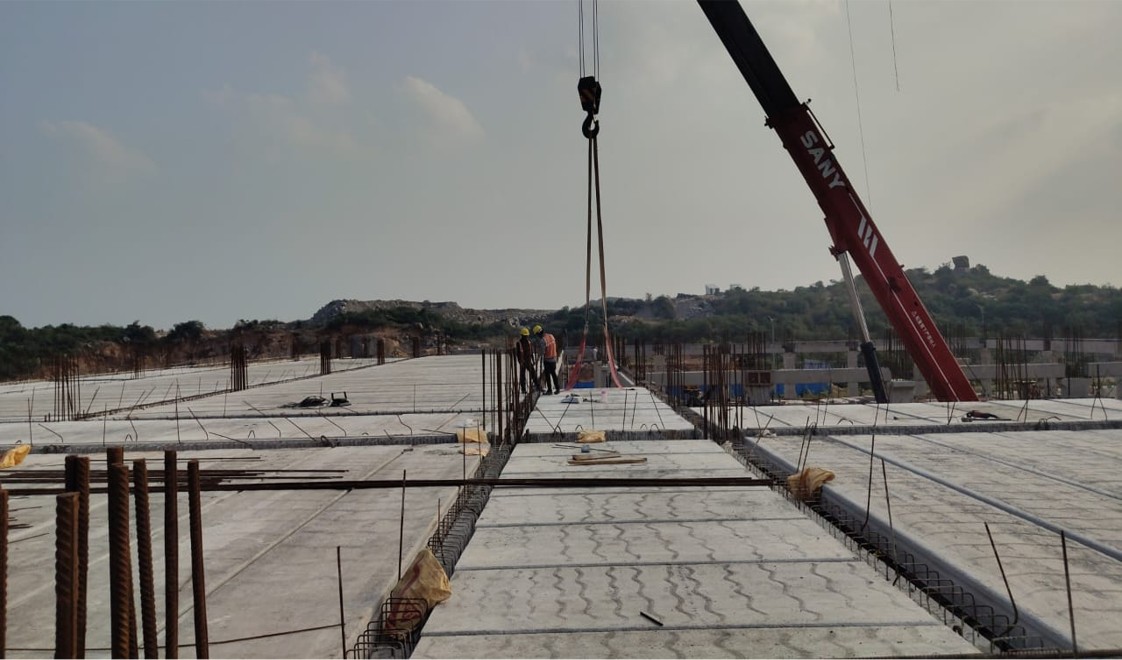
10. Installation at Site

Here is where precast shines—installation is extremely fast.

✔ Step 1: Crane Lifting

Cranes lift the elements using pre-installed lifting hooks.

✔ Step 2: Positioning

Elements are guided to the desired position using alignment bars.

✔ Step 3: Connection

Elements are connected using:

  • Grout
  • Bolts
  • Weld plates
  • Sleeves
  • Post-tensioning

✔ Step 4: Grouting

High-strength grout fills gaps to ensure:

  • Load transfer
  • Stability
  • Water-tightness

Within hours, a building begins to take shape.


11. Final Finishing & Sealing

Once installed:

  • Joints are sealed
  • Finishing is applied
  • MEP integration is checked
  • Quality inspection is done

Precast surfaces are smoother, requiring minimal plaster.


Why This Process Works Better Than Traditional Construction

✔ Faster by 30–50%

Parallel activities drastically cut timelines.

✔ Higher Quality

Factory-controlled conditions eliminate errors and inconsistencies.

✔ Stronger Structures

High-density concrete improves strength and lifespan.

✔ Less Labour

Automation reduces dependence on skilled labour.

✔ Weather-Proof Production

Rain or heat doesn’t delay factory operations.


The Environmental Advantage

Precast is eco-friendly because:

  • Less material waste
  • Lower carbon footprint
  • Controlled water usage
  • Recyclable moulds and materials

This makes it ideal for green construction projects.


Where Precast Technology Is Used

Precast is used in:

  • Residential buildings
  • High-rise apartments
  • Villas and row houses
  • Commercial buildings
  • Industrial sheds
  • Metro stations
  • Bridges & flyovers
  • Water tanks
  • Compound walls

It fits almost every type of construction.


Final Thoughts: Precast Is the Smartest Way to Build Today

Precast technology combines:

  • Speed
  • Strength
  • Precision
  • Safety
  • Predictability

As construction demands rise and labour shortages increase, precast is set to become the dominant construction method of the next decade.

What Is Precast Concrete? A Complete Beginner’s Guide for Builders & Homeowners

Construction today is evolving faster than ever. With stricter timelines, rising labour costs, and increasing demand for durable structures, builders are looking for smarter, faster, and safer building methods.
One technology leading this revolution is Precast Concrete.

If you are a builder, contractor, architect, developer, or even a homeowner planning your dream house, understanding precast technology can save you time, money, and a lot of construction stress.

This blog breaks down precast concrete in the simplest way possible—including how it is made, why it is used, what makes it different from traditional methods, and whether it is right for your project.


1. What Is Precast Concrete?

Precast concrete is a construction technique where structural elements are manufactured in a controlled factory environment, cured properly, and then transported to the project site for installation.

These elements can include:

  • Walls
  • Slabs
  • Beams
  • Columns
  • Staircases
  • Boundary walls
  • Manholes
  • Retaining walls
  • Drainage units

Instead of constructing everything on-site (which is slow and weather-dependent), precast shifts the process to a production facility—similar to how cars are built in factories.

Think of it like this:
Traditional construction = cooking every single item fresh in your kitchen
Precast = ordering from a high-quality cloud kitchen where everything is prepared in controlled conditions

The result is faster, stronger, cleaner, and more predictable construction.


2. How Is Precast Concrete Made? – Step-by-Step

Step 1: Design & Engineering

Engineers create detailed shop drawings using BIM (Building Information Modeling) to ensure every element fits perfectly like a puzzle.

Step 2: Preparing the Moulds

Moulds are made from steel, aluminium, or high-strength materials depending on the design.
These ensure exact dimensions every time.

Step 3: Mixing & Pouring

High-quality concrete is mixed using:

  • the right water-cement ratio
  • admixtures for strength
  • controlled temperature

It is then poured into moulds.

Step 4: Vibration & Compaction

Machines vibrate the mould to eliminate air bubbles and improve density.

Step 5: Curing

Precast units are cured in controlled conditions—often with steam curing—which gives them higher early strength.

Step 6: Demoulding

Once the elements reach desired strength, they are removed from moulds.

Step 7: Transport

Finished units are loaded onto trucks.

Step 8: Installation

Cranes lift and position the elements at the site.
Connections are created using:

  • grout
  • welding
  • bolting
  • post-tensioning

This is why precast installation is extremely fast and clean.


3. Why Is Precast Concrete So Popular Today?

✔ Speed

Precast reduces construction time by 30–50% because:

  • Factory production happens in parallel with site work
  • No waiting for curing on site
  • Installation is quick

For builders with tight deadlines, this is a game changer.

✔ Durability

Precast elements are:

  • denser
  • stronger
  • highly resistant to cracking
  • less affected by weather

They also last 75–100 years with very low maintenance.

✔ Cost-Effective

You save money through:

  • reduced labour
  • fewer delays
  • less material wastage
  • quicker project completion (faster ROI)

✔ Weather-Proof Construction

Rain, heat, or cold—precast production never stops because it happens indoors.

✔ High Quality & Safety

Factory production ensures:

  • uniform quality
  • accurate dimensions
  • safer working conditions
  • minimized accidents at site

✔ Eco-Friendly

Precast reduces:

  • waste
  • dust
  • noise
  • carbon footprint

It supports green building certifications like IGBC and LEED.


4. Precast vs Cast-In-Situ (Traditional Construction)

FeaturePrecastCast-In-Situ
SpeedVery fastSlow
QualityHigh & consistentVariable
Weather DependenceNoYes
Labour RequirementLowHigh
WasteMinimalHigh
Initial CostSlightly higherLower
Long-Term SavingsSignificantly higherModerate

Precast is not always cheaper initially, but the overall savings are huge due to faster completion and lower maintenance.


5. Types of Precast Concrete Elements

Structural Elements

  • Beams
  • Columns
  • Wall panels
  • Floors (hollow core slabs, solid slabs)

Architectural Elements

  • Façade panels
  • Decorative walls
  • Cladding

Infrastructure Elements

  • Manholes
  • Box culverts
  • Boundary walls
  • Retaining walls

Residential Components

  • Staircases
  • Compound walls
  • Lintels
  • Balconies

Whether it’s a villa, apartment complex, commercial building, or infrastructure project—precast has an application everywhere.


6. Is Precast Suitable for Home Construction?

Yes—even for luxury villas, precast is becoming a preferred choice.

Benefits for homeowners:

  • Faster construction (3–6 months)
  • Cleaner site
  • Stronger walls & slabs
  • Better finish
  • Lower long-term maintenance
  • Excellent temperature and sound insulation

Many modern villa projects in India already use precast.


7. Limitations of Precast Technology

Transparency is important, so here are the challenges:

Requires Efficient Transportation

Large precast units need careful planning for transport.

Requires Skilled Assembly

Installation must be done by trained teams.

Design Must Be Finalized Early

Precast is not ideal for last-minute design changes.

Not Ideal for Very Small Projects

Unless it is standardized (like boundary walls).


8. Who Should Use Precast Technology?

Precast is ideal for:

  • Builders with deadlines
  • Developers constructing multiple houses
  • Commercial building projects
  • Infrastructure contractors
  • Government projects
  • Homeowners who want fast and premium quality construction
  • Industrial building manufacturers

If efficiency, safety, and quality matter to you, precast is the right choice.


9. Final Thoughts: Is Precast the Future of Construction?

Absolutely. Precast is:

  • Modern
  • Fast
  • Durable
  • Eco-friendly
  • Cost-efficient

With India’s rapid growth, labour shortages, and demand for high-quality structures, precast is not just a trend—it is the future of smart construction.